The William Barak collection at the Koorie Heritage Trust

You need to have javascript on and the latest version of Flash installed to see this content

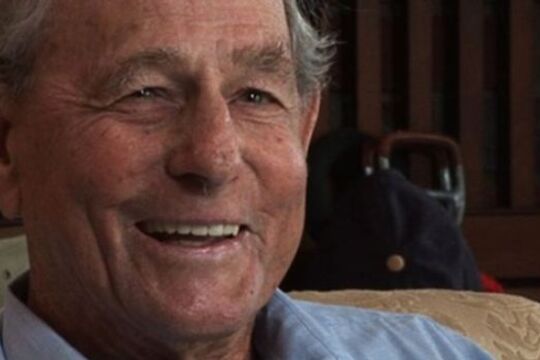
Senior Curator at the Koorie Heritage Trust, Nerissa Broben, talks about items in the Trust's William Barak Collection: a painting, a shield and a club.

Further Information

Transcript of
The William Barak Collection at the Koorie Heritage Trust
Video
Koorie Heritage Trust Inc.

The William Barak painting is one of the treasures that the Trust has here in its Collections. It was purchased by the Trust back in 1983 from an auction house. William Barak was a Ngurungaeta for the Wurundjeri people and that means Clan leader. He spent the latter part of his years on Coranderrk Reserve, which was from 1863 to 1903, where he became a prominent figure in the struggle for Aboriginal rights, and particularly the rights of his people on Coranderrk Reserve. William Barak did the majority of his paintings around the 1880s and 1890s and this particular painting isn’t actually titled but is consistent with the majority of Barak’s paintings, in that it depicts ceremony. We can see in the top half of the image we’ve got these four figures and we’ve got men with beards and they’re clapping boomerangs. Boomerangs were used as our musical instruments down here they didn’t actually use the didgeridoo. We’ve got two figures in the bottom half of the painting and they’re dressed in possum skin cloaks, again we can tell that they’re men because they’ve got these beards and there’s a row of women seated at the bottom of the painting as well and it looks like they’re clapping. They may also have been beating possum skin rugs that were stretched over their knees that were sometimes used as drums and you can also see the feather of what looks like a lyrebird as part of their headdress as well. In 2006 we took the William Barak painting to the Centre for Conservation of Cultural Materials to get the painting conserved and as part of that process the conservators did some infrared work on the painting…and they came across some under-drawings and a map underneath the actual painting we can see William Barak’s sketches that he did in pencil which shows some of the features of the face and different aspects of the painting and we can also see what appears to be a type of map and we can pick up words like Chamber and Wash Drive which make us think that it may be some kind of map related to mining or something similar. So this shows us that William Barak was actually using second hand materials for part of his painting and I guess if we’re thinking about William Barak having access to materials perhaps someone on the Mission or the Mission Manager was supplying him with materials so that he was able to complete his paintings.

The Trust is also fortunate to have two artefacts by William Barak in our Collection and these artefacts, the shield and the club were purchased by the Trust back in 1994 from a private collector who bought them years previously from a shop called “Decoration” in Little Collins Street. Both the shield and club are quite typical of the types of artefacts that we see down here. This shield here has these concentric diamond designs and the club itself is also quite typical in terms of the style and designs. Both of these artefacts have inscriptions on them in ink that say “Made by King Barak, last of the Yarra Tribe 18/12/1897. So this actually would have been written by somebody else on behalf of Barak because Barak himself couldn’t write. These are the only artefacts that I am aware of that William Barak made, that still exist in collections today. We do know that Barak made a range of different artefacts in his time at Coranderrk. He made things obviously like shields and clubs but also spears and wooden lighters. It’s quite likely he was actually using a combination of traditional and contemporary tools to actually make the artefacts so with the designs on the shield we can see that these were most likely carved out with a pen knife whereas traditionally designs would have been carved with things like a possum jaw. Glass was also used to smooth the surface over. As an artist and craftsman Barak was very proud of his culture and he was able to share his culture by making things like artefacts, the paintings and things that he made but also by doing boomerang throwing, showing people how you start fire and those types of things. Around this period of time lots of people were coming up to the Missions and actually looking for souvenirs to buy and take back with them. So these artefacts represent that period in time. Many artefacts were also made as gifts to dignitaries where they led Deputations down to Government and handed over a range of artefacts to either the Kings, the Queens or the Governors of the time as a way of kind of connecting them and getting their message across.

This image is of the deputation of 1859 led by Simon Wonga who was leading the Yarra and the Goulburn tribes down to the Governor requesting that land be set aside for them. Here we can see one of the Protectors William Thomas and he’s interpreting on behalf of the Aboriginal community for rights to land and in the foreground here we’ve got what looks like a possum skin cloak folded up with some clubs, some spears and a shield. Barak himself led a number of Deputations down to Melbourne from Coranderrk after the passing of his cousin Simon Wonga. The Barak artefacts and painting in the Collection are quite significant to us because of who Barak was as a person but also because we don’t have very many items that date back to the late 1800s we can attribute to a specific individual, so for that reason these items are very important to the Trust and very significant to the community.

Detail

The William Barak Collection at the Koorie Heritage Trust
Interview with Nerissa Broben
filmmaker: Sophie Boord
Filesize: 20.6 MB

Contributor


Terms of Use

Contact content contributors for terms of use.

Copyright

The Koorie Heritage Trust

Share This